
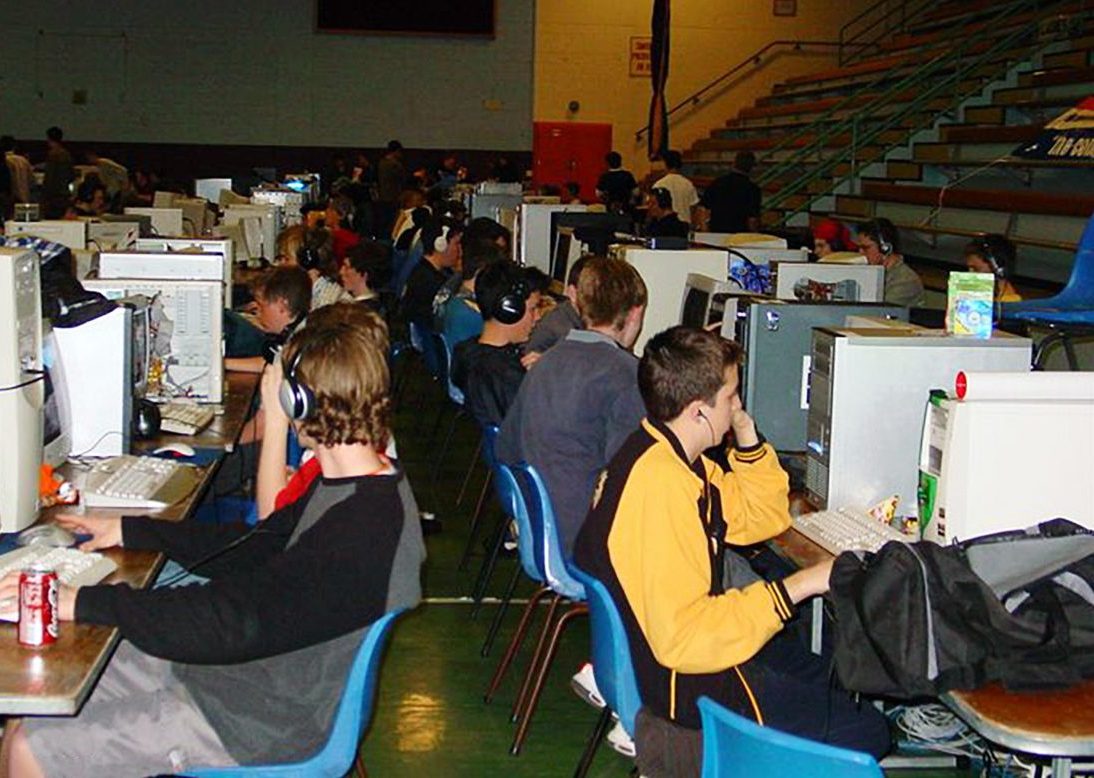
Once upon a time in cyberspace – a place where a light waft of teenage male body odour would seamlessly blend with that of sweet soft drink and stale pizza, a sort of modern day baron thrived. From thrones made of failed CD burns stacked miles high, these noble adventurers surfed the treacherous high seas of the internet, propelled by the whir of the almighty swirling engines installed in their computer towers – the fastest drives and as many as you could afford.
Whether it was Kazaa, Limewire, Napster, news groups, ICQ, MSN Messenger or just some ripped CDs and DVDs – platform mattered not; from the latest music, to movies and games, and “system files” (a teenage euphemism for pornography), the barons were an almighty force limited only by the size of their hard disks, and to a lesser extent, the speed of their prehistoric internet connections. In Australia, if you had access to the unlimited cable once offered by any one of the two cable operators, you instantly soared into the stratosphere as Nerd-Blackbeard. The rest waited for all eternity for the progress bars to move; nurturing intense disconnection anxiety if mum picked up a phone on the same line even for a single second.
On King Mortimer’s Revenge (my mighty pirate ship, obviously), a feeling of freedom was in the air. First-run episodes of The Sopranos airing in the 11pm death slot on Nine during a school night? I think not, for Nerd-Blackbeard was here.
To live a life in the retail lane was to live one in the stone age, and corporations certainly treated Australians with contempt across the board in this regard. Our cinema releases were later, our TV show releases were later, and our console games were later (and slower). Let me assure you, on King Mortimer’s Revenge, my cargo was sprawled out across CD wallets and disc spindles reaching for a mile into the sky. Back then, a life on the high seas was a life lived at the bleeding edge.
Today, Nerd-Blackbeards may be older, but I’m delighted to reveal that we still exist, and in some ways, we’re even more industrialised than we were as teenagers. Operating far beyond the confines of our parents’ homes, we are hardened by more than twenty years of navigating the edges of the internet, and now we have as much money as we do storage. Despite the Murdoch-driven stalling tactics deployed by the Abbott/Turnbull Liberal government, most metro Nerd-Blackbeards are now surfing the seas at higher knots than ever before. We’re basically Adobe’s worst nightmare.
I remember the prehistoric internet in the same way I imagine the 1960s is remembered by our parents or grandparents. It was a time of rampant creativity, blatant piracy, and doing and saying whatever the hell you wanted. It was “go to hell!” to the structures and expectations of old media, with consumer convenience emerging as the leading priority.
Though with twenty-one more laps around the sun since completed, a dark cloud has started to form over that which I and many still hold so dear. On the time-battered decks of King Mortimer’s Revenge, the CD wallets and spindles of yesteryear are long gone; replaced by network attached storage and decentralised peer-to-peer networking in the latest iterations of the long-standing cat and mouse game of technological innovation and migration. Put simply, my mighty ship has continued to sail with the breeze of the high sea.
However, the massive storm brewing on the horizon during the last few laps has brought swells big enough to make any seasoned explorer sick to their stomach.
Flickers of lightning began to flash across the deck of King Mortimer’s Revenge. The Mountain Dew and Doritos aesthetics of the internet are giving way to a pungent new odour. Something new, yet strangely familiar permeates the air.
With every flash off the bow of King Mortimer’s Revenge, the memories of barons past flicker like ethernet activity lights – for it’s a smell that only the most seasoned seafarer would remember; an explorer who was part of that ragtag era of the internet, fuelled by a steady stream of hormones, junk food and someone else’s money for the equipment.
Surely it can’t be? From the depths of the Nine death slot in 2003, right to my 2024 nostrils… It’s the corporate battleship armada! And the smell? Greed.
The enemy fleet had humble beginnings in the 2010s. From the earliest ad-free days of YouTube, the widespread convenience of Netflix, and on-the-go iPod destroyer, Spotify – streaming looked like a ship crafted in the shape of a golden goose, steaming into (ethernet) ports all over the world and further, forcibly unclenching the grasps of old media; flying the flag of convenience consumers so yearned for… but it wasn’t to be.
Fast forward to 2024 and we find ourselves ravaged – by a rampant infestation of subscriptions and tier-based marketing structures. Almost anything you can conceive of is now a subscription or paywalled. From news, to WordPress and its individual plugins, to YouTube, to Microsoft Office, and to video games too – there is absolutely no limit to how low the enemy will go. In 2004, people modded skins into Counter-Strike. In 2024, people sometimes pay thousands of real life dollars for the same pleasure.
Corporations took a while to get seaworthy, but they figured out a few things during the last twenty years. Firstly, that a shift to subscriptions and on-demand streaming means consumers only ever license or rent material, and never own a copy of it. And secondly, a yearly fee structure means there’s an ongoing revenue stream instead of a one-off purchase cost. This applies across the stuff you like to watch, as well as the stuff you liked to buy to keep (like software, or movies).
You no longer get to own anything – it’s all just rented to you for a period of time that is convenient to the copyright holder, and then it’s permanently withdrawn or shuffled to another paid service so you get to create another revenue stream for someone else (Disney and Netflix with Fox rights; Steam and EA). It’s as much about control as it is the bottom line. Further, when you pay for a level of service, you are now often offered price tiers which artificially restrict certain features to higher price points – even though, for the provider, providing that ‘extra’ often costs them nothing (Monday.com; WordPress; Canva).
The glory of the prehistoric internet – that which brought us so much unfiltered joy and opportunity – has merely become another target for the enemy fleet to pillage for profit. An environment that has been well and truly ravaged by a plague of modern convenience and greed.
This piece isn’t so much about social media, but can you remember when Instagram used to be about your friend’s cool photos? Or when the Facebook timeline used to keep you up to date with your friends heavily moderated shitposts about their progress in life? Or when Twitter was a ginormous echo chamber for journalism? Or when Reddit allowed third-party apps to reproduce the site for free? All of these structures have been hollowed out and now exist only to serve you the most appropriate ads the various algorithms can fit to your individual browsing habits during your scroll of doom.
We (if I may generalise for a second) all just line up single file at the proverbial handtowel dispenser only to find it empty, and then when we try to just use our pants, someone tries to force us to pay. Paying for what was once free is the modus operandi of the companies now running the modern internet.
As the corporate warships flood in and the sailors fuck like rabbits; ploughing endless new platforms and services into an already extremely crowded market, and moving cargo across them in an endless bid to make you pay for everything you do – King Mortimer’s Revenge continues to sail.
My ship will always steam through the enemy armada, rebelling against any new and invigorated corporate force. As the skipper, I sail now in exactly the same way as I did in 2003. Ads on YouTube? Hacked Amazon Firestick. Adobe Creative Cloud? New version downloaded and cracked every quarter. Shows split across five subscription platforms? BitTorrent. If I was paying for everything that’s possible on the internet, I’d be fucking broke. I will always have a free answer to paid problems.
In 2003 I didn’t give a fuck, and more than two decades later, I still don’t give a fuck. The ultimate reality of the internet is – it’s a collective of people that find a way. The internet always finds a way.
People who care about the internet – about using it, and about bringing that early 2000s vibe of the Wild West – they collectively thumb their noses at paywalls, bullshit monetisation, and interference at any level in terms of information or sharing of resources. That is the true spirit of the internet, and something that will never die.
To the modern day Nerd-Blackbeards and barons of cyberspace, I salute you for keeping the dream alive.
Thanks for hating along with me for fifteen years. -SM